Guide to supplement labels
Proprietary Blends Explained: What a Supplement Label Hides
A proprietary blend is a group of ingredients listed under one name with one total weight. The law asks for the order, heaviest first, but not for the weight of each one. That lets a maker keep a formula private, and it leaves buyers unable to tell a real dose from a pinch. Compare blends by asking for the amounts.
Written by the FlowNerves label deskUpdated
The short definition01
What is a proprietary blend on a supplement?
A proprietary blend is a set of ingredients that a maker lists under a single name. The label gives one weight for the whole group. It does not have to give a weight for each ingredient inside.
You will see names such as "Energy Matrix", "Nerve Complex" or just "Proprietary Blend". The first two are made-up names, which the rule allows. The last is the plain term the rule expects.(eCFR, 21 CFR 101.36)
The word proprietary only means the recipe belongs to the company. It says nothing about quality. A blend can be well made or poorly made, and the label alone will not tell you which.
Anatomy of a blend line02
How is a blend printed on the Supplement Facts panel?
The federal labeling rule sets out how a blend is shown. The blend gets a name. The total weight of the group goes on the same line. The ingredients sit underneath, indented, in descending order of predominance by weight.(FDA, Dietary Supplement Labeling Guide, Ch. IV)
The table lists each part of a blend line and what it tells you.
| Part of the label | What it tells you |
|---|---|
| Blend name | A brand-style or plain label for the group |
| Total weight | The combined weight of all the ingredients in the group |
| Indented names | Which ingredients are inside, heaviest first |
| Missing numbers | The weight of each single ingredient is not required |
| Daily Value symbol | A mark meaning no official daily target exists for the group |
That last row trips people up. The symbol is not a warning. It is a note that the group has no daily target to compare against.
A nutrient that does have a Daily Value, such as magnesium, is supposed to be declared on its own line with its own weight, even if the product also holds a blend.(eCFR, 21 CFR 101.36) Be alert when such a nutrient appears inside a blend with no figure.
Their side of the story03
Why do companies use blends at all?
There are fair reasons. A formula can take years to develop, and a rival can copy a printed list of amounts in a day. Keeping the numbers private protects that work.
A blend also saves label space on a small bottle. One line is shorter than a dozen. Some makers use blends to describe a tested combination as a unit, and that is their right under the rule.
The trouble is that the same tool is easy to misuse. A short list of impressive names can sit on a label while the real weight comes from a cheap filler or a single low-cost ingredient. The panel would look the same. Nothing in the format lets a buyer see the difference.
A partial clue05
Does the order of ingredients tell you the amounts?
It tells you a ranking, not a quantity. Under the rule, the names inside a blend are listed from the most weight to the least. If the first name is a cheap one, the blend may lean on it.
The ranking is still blunt. The top name might be nearly all of the weight, or it might be only slightly ahead of the second. And a ranking says nothing about whether the total weight is large or small.
- Ask whether the total weight is printed beside the blend name.
- Compare that total with the number of names inside it.
- Remember that a long list in a small total means each name gets very little.
Take a blend that lists eight names and a total that would fit in a single small scoop. Each name could only be a tiny share. You can reason this way without knowing a single figure, and you do not need any math beyond division.
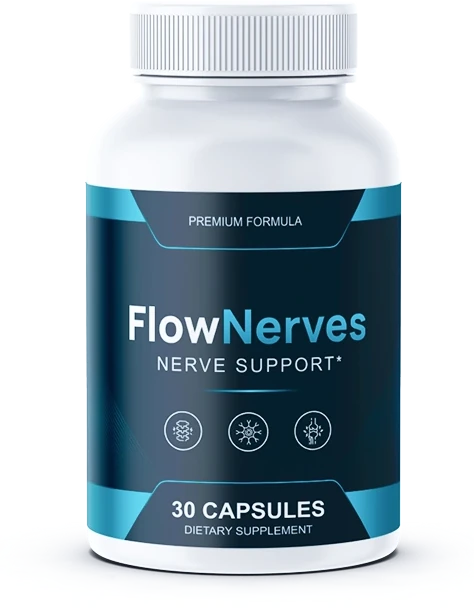
FlowNerves capsules: 30 to a bottleOne capsule a day · 2, 3 or 6 bottles · 60-day satisfaction promise
See packsRed flags on the label06
What are the common warning signs?
Blends are not a scandal by themselves. These patterns, taken together, are worth a pause.
- A long list of exotic names with a very small total weight
- A claim such as "clinically studied" with no name of the study or the dose
- A "premium" or "advanced" label word standing where an amount should be
- No lot number, no use-by date and no company address on the bottle
- A panel that cannot be found on the seller's page before you buy
Studies of a single ingredient do not carry over to a blend of ten. A seller who quotes a trial and then prints no dose has not shown you that the trial applies.
Five steps07
How do you compare two products when both use blends?
You can still compare. You just have to work from what is printed and ask for the rest.
- Find the total blend weight on each label and note the serving size.
- Count the names inside each blend and divide the total by the count.
- Look for any ingredient pulled out onto its own line with its own weight.
- Check the price per serving, not per bottle, because bottle counts differ.
- Ask each seller for the amounts, and note who answers plainly.
Step four is where many buyers slip. A bottle of sixty looks like a better deal than a bottle of thirty until you learn the serving is two capsules.
Safety angle08
When does a blend matter for medicines?
A blend is hardest on people who take prescription medicine. Many common supplement names have medicine links that depend on dose. Blood thinners, diabetes medicine, blood-pressure medicine and thyroid medicine are the usual four.
The NCCIH tells consumers that supplements can interact with medicines and pose risks to people with certain conditions, and that a health provider should know everything you take.(NCCIH, Using Dietary Supplements Wisely)
So the safest habit is dull but reliable. Take the label, or a photo of it, to your pharmacist. Ask them to look up each name. A blend with many names gives a pharmacist more to check, and they would rather see it before you start than after.
If you ever have a bad reaction, the FDA runs a reporting program where consumers can file a report.(FDA, MedWatch) Keep the bottle, the lot number and a note of the date and symptoms.
A worked example09
How does this look on a real product?
Take FlowNerves. The seller names six ingredients and says they sit in a proprietary blend. No amount is printed for any of them in anything we have, and only the front of the bottle reached us. That is the general pattern described above, in one real case. Our FlowNerves blend page works through what is and is not known about that bottle.
The same five checks apply to any brand. They are worth more than any single article, including this one.
FAQ10
FlowNerves questions people ask
Are proprietary blends legal?
Yes. The federal rule names them and says how to print them: a blend name, one total weight, and the ingredients indented in order of weight.
What does "proprietary" mean on a label?
It means the recipe is the company's own. It is not a grade of quality and it does not mean tested.
Can a supplement hide an ingredient inside a blend?
The names inside a blend are listed, so an ingredient is not hidden by name. Only its individual weight is allowed to stay private.
Why do some labels show a total weight with no breakdown?
The rule asks for the total of the group and the order of names, not for each weight. The total is the one number you can still use.
Are blends worse than labels that list every amount?
Not by definition. They are harder to judge, so a buyer has less to go on. Clear amounts make a product easier to trust.
Should I avoid products with proprietary blends?
You do not have to. Ask for the amounts, compare the total with the number of names, and talk to a pharmacist if you take medicine.
How do I find out what is really in the blend?
Ask the seller for a certificate of analysis for your lot. A real one lists measured amounts. A reply that repeats marketing words is a sign to wait.
Who wrote this11
Written and reviewed by
Pages built from the bottle front, the seller's brief and linked NIH, FDA, FTC, NIDDK and peer-reviewed sources.
Last updated . Read our editorial standards and how we check reviews. This website is the information site for a U.S. authorized retailer of FlowNerves. It is not the manufacturer or the distributor. We earn money when you buy through our order links.
Keep reading
More about FlowNerves
USA Authorized Retailer
Ready to look at FlowNerves?
Check your medicines first, especially blood thinners and diabetes medicine, keep every prescription going, then pick a pack of 2, 3 or 6 bottles. The checkout shows the final total, any shipping and the 60-day promise.
- Checkout runs on the sales site
- 60-day satisfaction promise
- Ships from the U.S.